Key Takeaways
Regional art centres bring exhibitions, learning, performance, and local stories closer to the communities that shape them.
- They give local artists places to exhibit, work, learn, and meet audiences.
- Their programs can connect generations, cultures, and neighboring communities.
- Accessibility depends on thoughtful design, outreach, pricing, and digital participation.
- Strong partnerships and mixed funding help centres remain useful and resilient.
- Visitors can support these hubs by attending programs, buying local work, and becoming members.
What regional art centres are and why they matter
Regional art centres are local cultural hubs that bring creative work and public activity together outside the largest metropolitan institutions. They may include galleries, studios, performance spaces, classrooms, archives, or gathering areas. When we look at art centres regional communities have built, we see places shaped by local priorities rather than a single national model.
How they differ from major city museums and galleries
A major city museum may hold extensive collections and attract international exhibitions, while a regional art centre often works at a more personal scale. Its staff may know the artists, schools, families, and community groups who walk through the doors. That closeness allows programming to respond quickly to local interests, seasonal events, and regional stories.
The difference is not simply one of size. Regional centres can offer a slower, more conversational experience, where visitors meet artists or return regularly to see work change. They may also combine several activities under one roof, making a visit feel less like a formal museum trip and more like participation in community life.
The role they play in local identity
A regional art centre can provide a place where a community sees its landscape, histories, languages, and everyday experiences reflected back. This matters especially when local creative work has had few public platforms. Exhibitions, murals, performances, and workshops can make room for many versions of a place rather than presenting one official story.
For First Nations communities, cultural authority and appropriate consultation are essential. We should look for programs that respect artists, Elders, knowledge holders, and community protocols, rather than treating culture as decoration. Local identity needs care as well as visibility.
Who benefits from a regional art centre
The benefits reach well beyond regular gallery visitors. Artists gain audiences and professional opportunities, young people encounter creative careers, and residents find welcoming spaces for conversation and expression. Visitors also gain a richer understanding of the place they are travelling through.
A centre can support teachers, families, older residents, local businesses, volunteers, and community organisations at the same time. Its value is often found in these repeated, ordinary connections: a school group returning for another workshop, an artist meeting a future collaborator, or a visitor discovering a story they had not heard before.
The programs and experiences regional art centres offer
Regional centres tend to build varied programs because their audiences have varied interests. A single week might include an exhibition opening, a school visit, a ceramics class, and an evening performance. This mix keeps the centre active and gives people more than one reason to come through the doors.
The strongest programs are usually connected to the place and its people. They may respond to local seasons, materials, histories, or current conversations while still welcoming artists and ideas from elsewhere. That balance keeps a centre open to the wider world without losing its local character.
Exhibitions featuring local and visiting artists
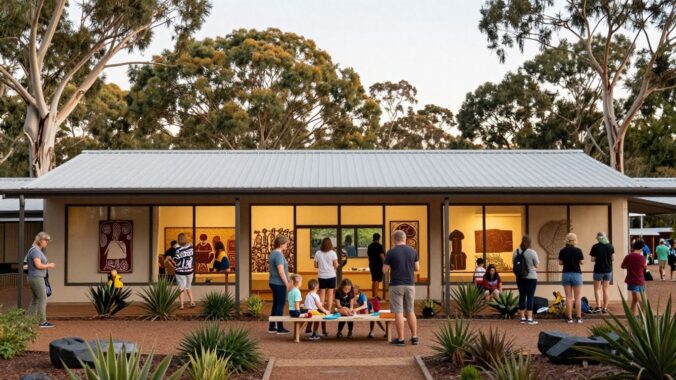
Exhibitions are often the most visible part of a regional art centre, but they can take many forms. A centre might show work by an emerging local artist, present a touring exhibition, display community-made objects, or pair visiting artists with regional collaborators. Each approach gives audiences a different way to encounter art.
Good interpretation helps visitors understand the work without telling them what to think. Labels, talks, and public conversations can explain materials, context, and process in plain language. For First Nations exhibitions, visitors should also be able to see that cultural permissions, attribution, and community relationships have been treated seriously.
Workshops, classes, and creative learning
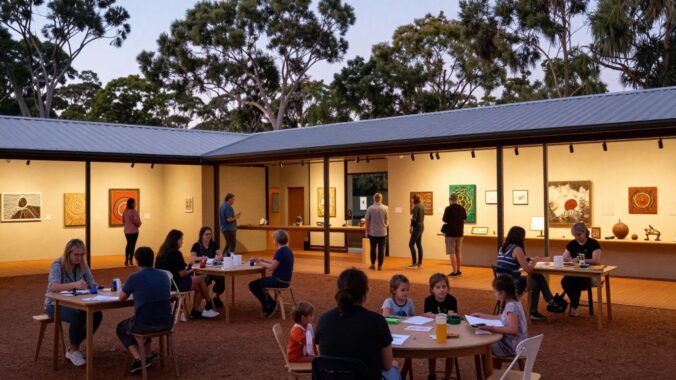
Hands-on learning turns an art centre from a place we look at into a place we use. Classes may cover drawing, printmaking, textiles, photography, music, writing, or local craft traditions. The most welcoming sessions make room for beginners and do not assume that everyone arrives with technical knowledge.
Workshops can also connect generations. Children may work beside grandparents, while adults learn from artists whose practices draw on family knowledge or Country. A clear introduction, suitable materials, and patient guidance often matter more than expensive equipment.
Performances, talks, and community events
Performances and talks create a different kind of energy from a gallery visit. Music, dance, theatre, poetry, film screenings, artist conversations, and community forums can bring people together at times when the centre would otherwise be quiet. They also let audiences experience creative work collectively.
Events work best when they are planned with the people expected to attend. Timing, transport, language, seating, and cultural protocols can all affect whether a gathering feels genuinely open. A modest event that feels welcoming may have more lasting value than a larger one that overlooks its audience.
Artist residencies and professional development
Residencies give artists time, space, and a relationship with a place. An artist might spend several weeks researching, making work, speaking with residents, or sharing skills through public sessions. The result is not always a finished exhibition; sometimes the important outcome is a new connection or a deeper understanding of local material.
Professional development can include mentoring, portfolio reviews, curatorial conversations, grant-writing sessions, or opportunities to learn about installation and public presentation. These experiences help artists build confidence and practical knowledge. They also strengthen the centre’s relationship with the creative workers in its region.
How regional art centres support local artists
For many artists outside major cities, a regional centre can be one of the few nearby places with suitable space, staff support, and an existing audience. Support does not have to mean a large grant. Access to a wall, a workbench, a conversation, or a well-run opening can make a meaningful difference.
Centres also act as connectors. They can introduce artists to schools, councils, collectors, festivals, cultural organisations, and one another. When this work is done respectfully, it helps creative practice become part of the broader social and economic life of a region.
Providing exhibition and studio opportunities
Exhibition opportunities help artists test ideas, develop a body of work, and learn how audiences respond. Studio access can be just as important, particularly for artists who work with large materials, shared equipment, or processes that are difficult to manage at home. A centre may offer short-term space, open studios, or project-based access.
Clear selection processes and realistic timelines make these opportunities more useful. Artists need to know what support is available, how decisions are made, and what is expected of them. Fair agreements can protect both the artist and the organisation while allowing room for creative risk.
Connecting artists with audiences and partners
A regional art centre can help artists meet audiences who might not otherwise find their work. Public talks, demonstrations, studio visits, and collaborative projects make the artist’s process more visible and create opportunities for direct conversation. These encounters can be valuable even when visitors do not buy anything.
Partnerships may also lead to commissions, teaching work, public art projects, or invitations to participate in festivals. A centre should not promise outcomes it cannot control, but it can create conditions for useful introductions. Relationships often outlast one exhibition.
Preserving regional stories and creative traditions
Artists frequently carry knowledge about local places, family histories, materials, and cultural practices. Regional centres can help preserve these stories by supporting exhibitions, recordings, workshops, and archives shaped by the people whose knowledge is being shared. Documentation should never replace living practice or remove control from the communities involved.
First Nations content requires particular care around permissions, cultural safety, and the handling of sensitive material. Centres should follow the guidance of relevant knowledge holders and artists, including any limits on photographing, reproducing, or discussing works. Respectful presentation is part of the work, not an afterthought.
Creating pathways for emerging talent
Emerging artists often need small, practical opportunities before they are ready for a large public commission or major exhibition. A regional centre can offer internships, volunteer roles, youth exhibitions, peer feedback, and chances to assist with events or installation. These experiences let people learn how cultural organisations operate from the inside.
A pathway should not require every artist to follow the same route. Some may want a professional career, while others may value creative practice alongside another job, family responsibilities, or community commitments. Flexible support allows more people to remain connected to the arts.
Making art centres accessible to the wider community
Accessibility begins before anyone arrives. It includes the cost of attending, the welcome at the door, the language used in promotion, the physical layout, and whether people can recognise themselves in the program. We should think of access as an ongoing relationship rather than a single adjustment.
Regional centres often work with limited resources, so priorities have to be set carefully. Small changes can still have a large effect when they respond to what residents actually say they need. Listening is a practical part of access planning.
Designing inclusive programs for different ages and abilities
Programs can welcome more people when they offer varied formats, clear information, and realistic levels of participation. A quiet session, relaxed performance, tactile activity, captioned talk, or family-friendly workshop may open the door for people who find conventional events difficult. Staff training and respectful communication matter just as much as physical access.
Centres can ask local disability groups, schools, families, older residents, and First Nations organisations to review plans before programs begin. This helps avoid assumptions and identifies barriers early. Inclusion becomes more credible when community members help shape the experience.
Reaching rural and underserved audiences
Not everyone can travel easily to a central building. Outreach may involve pop-up exhibitions, mobile workshops, school visits, artist talks in community halls, or partnerships with libraries and local services. These activities can bring the centre’s resources closer to people rather than expecting every audience to come to it.
A useful outreach program is planned for the realities of each place. Travel distances, weather, staffing, internet access, and local schedules all affect participation. Centres should build relationships over time instead of appearing only when they have a project to promote.
Using digital tools to expand participation
Digital tools can help people preview an exhibition, join an online talk, access learning materials, or stay connected between visits. They are especially helpful for residents who live far away or cannot attend at a particular time. However, online access should extend a program rather than become a substitute for every in-person experience.
The quality of digital participation depends on simple choices: readable pages, captions, reliable audio, clear navigation, and information that works on a phone. Centres should also remember that not everyone has fast internet or confidence with digital platforms. Offering more than one way to participate keeps the invitation genuine.
Balancing free events with paid experiences
Free entry and free public programs can remove a significant barrier, while paid classes, memberships, and ticketed events can help cover costs. A thoughtful mix lets people try a centre without pressure and then choose deeper experiences when they are able. Pricing should be explained plainly, without making visitors feel that one form of participation is more valuable than another.
Centres can also use concessions, family pricing, community tickets, and occasional pay-what-you-can sessions. These approaches work best when they are part of a wider access plan rather than a last-minute discount. The aim is to protect the centre’s future while keeping the welcome broad.
How regional art centres are funded and managed
Running a regional art centre involves much more than presenting exhibitions. Buildings need care, staff need support, artists need fair payment, and programs require planning, insurance, equipment, and communication. A stable organisation usually depends on several sources of income and a clear sense of public purpose.
Management also involves trust. Boards, councils, staff, volunteers, artists, and community partners may have different responsibilities, but they all influence how the centre is understood. Good governance makes those responsibilities visible and creates ways to respond when priorities change.
Public funding, grants, and sponsorships
Public funding and grants can support exhibitions, education, facilities, outreach, and artist fees. Sponsorship may provide money, materials, services, or practical assistance. Each source comes with its own conditions, so centres need to check that external support fits their values and does not compromise artistic or cultural integrity.
Grant applications can take considerable time, especially for small teams. Clear records of activities, budgets, partnerships, and outcomes make the process more manageable. Strong applications usually explain not only what will happen, but why the work matters to the community.
Earned income from memberships, classes, and retail
Memberships can create a continuing relationship between visitors and the centre. Classes, venue hire, ticketed events, café sales, and retail may also contribute to operating costs. Shop stock can be a particularly direct way to support artists when it includes locally made work and fair payment arrangements.
Earned income should complement public access rather than quietly replace it. A centre that relies too heavily on commercial activity may lose time for experimental, educational, or community-led work. The best balance reflects the centre’s purpose and the capacity of its audience.
Partnerships with councils, schools, and cultural groups
Partnerships can bring expertise, venues, audiences, funding, and practical support that one organisation could not provide alone. Councils may assist with facilities, schools can support learning programs, and cultural groups can guide relevant community engagement. First Nations organisations and knowledge holders should be involved early when programs relate to Country, culture, or community history.
Good partnerships are based on clear expectations. It helps to agree on roles, decision-making, payment, credit, access, and what happens after a project ends. Written agreements may feel formal, but they can prevent confusion and protect relationships.
Measuring community and economic impact
A centre can measure more than attendance. It may track repeat visits, artist participation, school engagement, volunteer involvement, audience feedback, local spending, or the strength of new partnerships. Numbers can provide useful signals, but they do not tell the whole story.
Stories and observations can show changes that a spreadsheet misses: a young person finding confidence, an artist meeting a mentor, or a community group gaining a place to gather. Evaluation should be proportionate to the centre’s size and used to improve decisions, not simply to produce impressive claims.
A healthy cultural centre measures not only how many people arrive, but whether people feel welcome enough to return.
This wider view helps managers explain the centre’s value to funders, partners, and residents. It also keeps evaluation connected to the everyday relationships that make the organisation matter.
How to choose a regional art centre to visit
Choosing a centre does not need to involve much research, but a little planning can make a visit more rewarding. We can look beyond the headline exhibition and consider the broader program, the people involved, and the kind of experience we want. Smaller centres often reward curiosity because their offerings change with local events and seasons.
A visit can also be part of a wider cultural journey. Nearby walks, markets, historic places, community events, and local food may help us understand the setting around the centre. We should approach First Nations experiences with respect, follow guidance, and avoid treating culture as a quick attraction.
Checking exhibitions and seasonal programming
Start with the centre’s current exhibition list, opening dates, and any information about artists or themes. Seasonal programs may include special displays, artist talks, performances, or community projects that are not available year-round. Checking ahead can help us choose a visit that suits our interests.
We can also look at how the centre describes local and First Nations content. Clear artist attribution, cultural information, and respectful language are useful signs that the program has been considered carefully. If information is limited, a friendly enquiry to the centre may be worthwhile.
Looking for workshops and family activities
A workshop can make a visit more memorable, particularly for children or people who prefer making to looking. Check the recommended ages, booking requirements, materials, duration, and whether beginners are welcome. Some activities fill quickly, while others are designed for drop-in participation.
Family programs do not need to be elaborate. A gallery trail, simple making table, storytelling session, or artist demonstration can give children a reason to slow down and ask questions. We can choose activities that leave room for conversation rather than trying to fit too much into one visit.
Planning around location, opening hours, and accessibility
Regional travel can involve long distances, limited public transport, and changing weather. Check opening hours, parking, public transport, toilet facilities, entry arrangements, and accessibility information before setting out. It is also sensible to confirm whether an exhibition or class requires advance booking.
If the available information does not answer our questions, contacting the centre is reasonable. Asking about quiet times, seating, service animals, interpreters, or step-free access can help staff prepare and help us feel more comfortable. Planning is not overcautious; it gives the visit a better chance of going well.
Supporting the centre through purchases and memberships
We can support a centre in ways that suit our circumstances. Buying an artist’s work, choosing a locally made item from the shop, paying for a class, donating, volunteering, or joining as a member can all contribute to its continuing work. Even returning for another program helps build a dependable audience.
Before buying, we can ask how artists are paid and whether membership benefits match what we value. The most useful support is informed and sustainable, not a purchase made out of pressure. A simple recommendation to friends can also introduce new visitors.
How to strengthen the future of regional art centres
Regional art centres remain strong when they are treated as essential civic spaces rather than optional extras. Their future depends on buildings and budgets, but also on relationships, imagination, and the ability to listen. We can all play a part, whether we are artists, visitors, educators, funders, volunteers, or neighbours.
The best next steps will differ from one community to another. A coastal centre, a remote centre, and a growing inland town may face very different needs. What they share is the need for sustained attention rather than short bursts of enthusiasm.
Building sustainable facilities and resources
Safe, adaptable buildings give centres room to change. Flexible galleries, accessible entrances, suitable storage, energy-conscious systems, reliable technology, and well-equipped studios can support programs for years. Maintenance may be less visible than a new exhibition, but it protects every activity that follows.
Resources also include people. Stable staffing, fair artist fees, volunteer support, and professional development help prevent burnout and preserve institutional knowledge. A centre cannot be sustainable if its work depends indefinitely on unpaid effort from a small group.
Developing programs with community input
Community consultation should happen before a program is fully designed, not only after it has been delivered. Listening sessions, artist discussions, school relationships, advisory groups, and informal conversations can reveal interests and concerns that formal surveys miss. First Nations-led work should be guided by the relevant community and cultural authorities.
Input does not mean every suggestion can be adopted. It does mean people should understand how their views were considered and what decisions were made. That transparency builds trust, even when a centre has to work within limited time or money.
Adapting to changing audience expectations
Audiences may want more flexible hours, clearer online information, family options, accessible events, and opportunities to participate rather than simply observe. Centres can respond without chasing every trend. The useful question is whether a change supports the organisation’s purpose and makes the experience more welcoming.
Regular feedback can reveal practical improvements. A revised booking process, better signage, a later opening, or a more comfortable seating area may have a greater effect than an expensive technology project. Small adjustments show that a centre is paying attention.
Creating long-term support for arts and culture
Long-term support comes from making arts and culture part of ordinary community planning. Councils, schools, businesses, tourism organisations, cultural groups, and residents all have a role in recognising the value of local creative work. Visitors can help by returning, sharing accurate information, and treating artists and cultural hosts with respect.
When we support regional centres consistently, they can take thoughtful risks, develop artists over time, and maintain relationships with communities. That is how a building becomes more than a venue. It becomes a place where people meet, remember, make, and imagine together.