Key Takeaways
Regional art centers can bring creative activity closer to home, though each has its own focus and resources. We can find a good fit by asking what is offered, who can participate, and how the center works with its community.
- Regional art centers may offer exhibitions, classes, performances, workspace, or other community programs.
- State and regional arts directories, local listings, and trusted community networks are useful places to search.
- Program fit, access, location, cost, and entry requirements all matter when choosing a center.
- We can take part by attending events, applying for opportunities, volunteering, or supporting the organization.
- Ongoing relationships and respectful local guidance can help us engage more thoughtfully with regional arts.
What regional art centers do
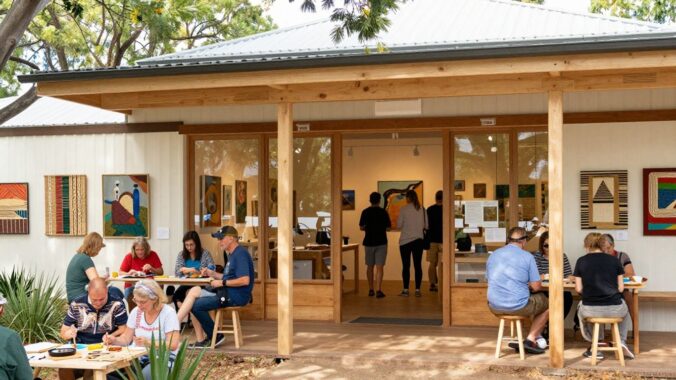
Regional art centers create places for people to encounter and take part in the arts close to where they live. Their work can include presenting art, offering learning opportunities, and connecting artists with audiences. The mix varies from one place to another, shaped by local interests, resources, and communities.
How they serve artists and local communities
A center may give artists a place to show work, meet collaborators, or develop skills, while offering neighbours a welcoming way to experience creative work. Some focus on a particular medium; others bring several art forms together. We can think of a center as a local meeting point, rather than assume that every organization provides the same services.
That local relationship matters especially when a program involves First Nations artists, stories, or cultural practices. We can look for signs that the center works with local communities respectfully, and that artists have a say in how their work is presented. Local context matters more than a broad label such as “regional.”
The programs and resources they may offer
Depending on the organization, activities might range from public exhibitions and performances to classes, artist talks, shared studios, or community projects. Some centers have resources for artists to develop or present work; others concentrate on events for audiences. Before making plans, we should check the center’s own current program information.
A center’s range can be easier to understand when we consider what we hope to do there. For example, we might be looking for a one-off visit, ongoing learning, or a chance to share our own work. The same organization may serve several of these purposes, but the details and availability can change.
How they differ from museums and commercial galleries
The boundaries between arts organizations can overlap, but their main purposes may differ. A museum often focuses on collections, care, interpretation, or exhibitions, while a commercial gallery may represent artists and sell work. A regional art center may put more emphasis on participation, learning, local programming, or bringing different groups together.
These are broad distinctions, not fixed rules. Some centers exhibit and sell art; some museums run hands-on programs; and galleries may host community events. We can get a clearer picture by reading an organization’s description and looking at its actual calendar, rather than relying on its name alone.
How to find art centers in your region
We can start with a broad search, then narrow it by location and the kind of activity we want to find. A search for “art centres regional” may surface useful starting points, even if local organizations use different terms in their names. It also helps to combine online searching with recommendations from people who know the area.
Search state and regional arts organization directories
State arts agencies and regional arts organizations often publish directories or links to local arts groups. These can help us identify organizations by location, art form, or community focus. When we search, we can keep a short list of promising leads and check each organization’s own site for up-to-date details.
A few search approaches can make the first pass more manageable:
- Search the name of your state or region alongside “arts organizations.”
- Try the town or county name with “art center,” “arts centre,” or “community arts.”
- Look for directories maintained by state arts agencies or regional arts organizations.
- Check when each listing was last updated and confirm details with the organization.
Directories are useful starting points, not a guarantee that a listing is current or that a program is open. We can use them to build a shortlist, then confirm schedules, eligibility, and contact details directly.
Check local government and community listings
City and county websites may list cultural facilities, public events, grants, or community programs. Local tourism pages and neighbourhood calendars can also point us towards smaller organizations that are less visible in broad searches. These listings are especially useful when we want to know what is happening nearby soon.
As we follow a listing, we should check whether it leads to the organization itself and whether the details are current. If the information is brief, a direct question to the center can clarify opening hours, costs, or how to attend. A quick confirmation can save us a wasted trip.
Ask libraries, schools, and artist networks for recommendations
People who work or participate locally may know about small, informal, or newly established arts groups that don’t appear high in search results. We can ask librarians, teachers, arts educators, and artists what organizations they trust or have worked with. Their suggestions may also help us understand a center’s atmosphere and the communities it serves.
When asking, it helps to be specific about what we are looking for: an accessible public event, a class for beginners, an exhibition, or an opportunity to meet local artists. We can also ask whether the center has community-specific protocols or guidance, particularly when First Nations cultural material or experiences are involved. Local knowledge adds useful context to a directory search.
What to look for when choosing a center
A nearby center is not automatically the right fit, and a perfect match on paper may not work with our schedule or budget. We can weigh the program itself alongside practical details, including how people are welcomed and who can take part. A little checking beforehand helps us choose with realistic expectations.
Match programs to your interests and goals
First, we can decide what we want from the experience. We might want to see local work, learn a technique, meet artists, share a project, or bring family members to an event. Then we can compare those aims with the center’s current offerings rather than its general description alone.
If we are interested in First Nations arts and cultural experiences, we can look for information about who leads the program and how cultural knowledge is shared. We should avoid assuming that one event or artist speaks for every community. A thoughtful center will make room for the specific people and context involved.
Review accessibility, location, and costs
Practical details shape whether we can participate comfortably. We can check transport and parking, opening hours, entrance routes, seating, sensory information, and whether an event has a fee. If something is unclear, contacting the center in advance is a sensible way to ask about the arrangements available.
Costs can vary between free public programs, ticketed events, classes, and application-based opportunities. We should check what is included and whether there are separate material or participation costs before signing up. A clear answer makes it easier to decide if the experience suits us.
Check whether opportunities are open to beginners or emerging artists
Program descriptions usually tell us whether prior experience, a portfolio, or particular materials are expected. If the wording is vague, we can ask rather than assume we are not qualified. Some activities are designed for people who are new to an art form, while other opportunities may be intended for experienced practitioners.
We should also look at dates, selection steps, and any expectations around participation. For an artist call or residency, the details may explain what applicants need to provide and what the organization offers in return. Knowing the scope early helps us choose opportunities that fit our experience and aims.
Ways to take part
Taking part does not have to begin with a formal application or a long-term commitment. We can visit an exhibition, attend a talk, join a class, or simply follow a center’s events until something catches our interest. Over time, small visits can help us feel more connected to the creative life of a place.
Attend exhibitions, performances, and workshops
A public event is often the easiest way to get a feel for a center. We can check whether registration is needed, how long the event runs, and whether there are any participation requirements. At exhibitions and performances, taking time to read the available context and listen to artists can make a visit more rewarding.
Workshops offer a more hands-on way to explore, but formats vary. Some are casual introductions; others involve a series of sessions or materials we need to bring. We can choose what suits our time and comfort level, then leave room for the experience to surprise us.
Apply for classes, residencies, or artist calls
For a more sustained commitment, we can look into classes, residencies, and calls for artists. Each has its own process, so we should read the description carefully and note deadlines, eligibility, fees, and what the opportunity includes. If the information leaves a gap, we can contact the organizer before preparing an application.
It may help to keep a simple record of opportunities that interest us, including dates and application requirements. We can then give ourselves time to prepare, rather than rushing at the last moment. An application is also a chance to check whether the center’s goals and working approach feel right for us.
Volunteer, become a member, or support fundraising
Many centers welcome help beyond attending events, though the options depend on the organization. Volunteering, membership, and fundraising can support programs and build a closer connection with the people who make them happen. We can ask what kind of help is useful before committing.
A good fit is one that works for both the organization and us. We might have time to help at an event, skills to share, or simply want to keep up with programs as a member or supporter. Whatever we choose, we can ask how contributions are used and what expectations come with taking part.
How regional art centers support local arts
Regional centers can help creative work reach people and create reasons for communities to gather. Their contribution is not limited to what happens inside a gallery or classroom; it can include relationships among artists, schools, local groups, and audiences. The way that support takes shape depends on local priorities and the center’s capacity.
Create opportunities for artists to share their work
Exhibitions, performances, public talks, and artist calls can give practitioners ways to present work and meet audiences. When centers provide these opportunities, they may also help audiences encounter art made close to home. We can check who is invited to participate and whether the program makes room for a range of local voices.
For First Nations artists, respectful presentation includes attention to the artist’s own terms and the context of the work. We should look for clear attribution and avoid treating cultural material as interchangeable or anonymous. Respectful presentation begins with listening to the people whose work and knowledge are being shared.
Connect schools and communities with the arts
Some centers work with schools, families, or community groups through workshops, visits, and public programs. These activities can make the arts part of ordinary community life, rather than something encountered only at a special venue. We can look at event descriptions to see who a program is designed for and how people can participate.
Where First Nations experiences or cultural knowledge are part of a program, the people involved should guide how that material is introduced. As visitors, we can approach with curiosity and respect, and follow any guidance offered by artists or hosts. A welcoming program makes participation possible without expecting one person to speak for an entire community.
Help preserve regional culture and creative traditions
Artists and cultural organizations can help keep local histories, practices, and contemporary creative work visible. That work is living and varied; it should not be reduced to a single story about a place. Centers can contribute by creating space for local artists and communities to share what they choose to share.
The most meaningful cultural encounters begin with respect for the people who hold and share the knowledge.
We can carry that principle into visits by listening carefully, respecting boundaries, and following the lead of local artists and communities. This approach leaves room for contemporary expression as well as continuity with creative traditions.
How to make the most of your experience
Finding a center is only the beginning; a little preparation can make each visit or application easier. We can stay informed without trying to attend everything, and take time to notice which programs feel valuable to us. Relationships often grow through returning and participating at a pace that feels comfortable.
Follow event calendars and application deadlines
Many centers share schedules through their websites, email updates, or social channels. We can choose one or two reliable ways to follow along and check details again before attending, since dates and availability can change. If an event requires booking, registering early can help us plan.
For opportunities with deadlines, we can note the closing date and any steps needed beforehand. Keeping the information in one place helps us compare options and avoid missing a useful opportunity. It also gives us time to ask questions while applications are still open.
Introduce yourself to staff and fellow participants
A brief conversation with staff or other visitors can help us feel at home and learn more about the center. We can ask what is coming up, how to get involved, or where to find information about a program. There is no need to arrive with a polished introduction; genuine interest is enough.
If we are attending a cultural program, we can follow the host’s lead about conversation, photography, and questions. Not every subject is available for public discussion, and a respectful visit includes accepting that. Listening can be just as meaningful as speaking.
Share feedback and stay involved over time
After an event, we can share a thoughtful comment with the organization, especially if it helps them understand what worked or what would make access easier. Feedback is most useful when it is specific and offered in a respectful way. We can also tell others about an experience while keeping the artist’s context and boundaries in mind.
If we want to stay connected, we might return for another event, join a mailing list, volunteer, or support a program in a way that suits us. A regional art center is part of a wider community, and our involvement can be modest but consistent. With time, we may find that the place becomes a familiar doorway into the art and stories of our region.